
September 23, 2026
Drone Detection System: Working Principles, Sensor Types and Performance Metrics
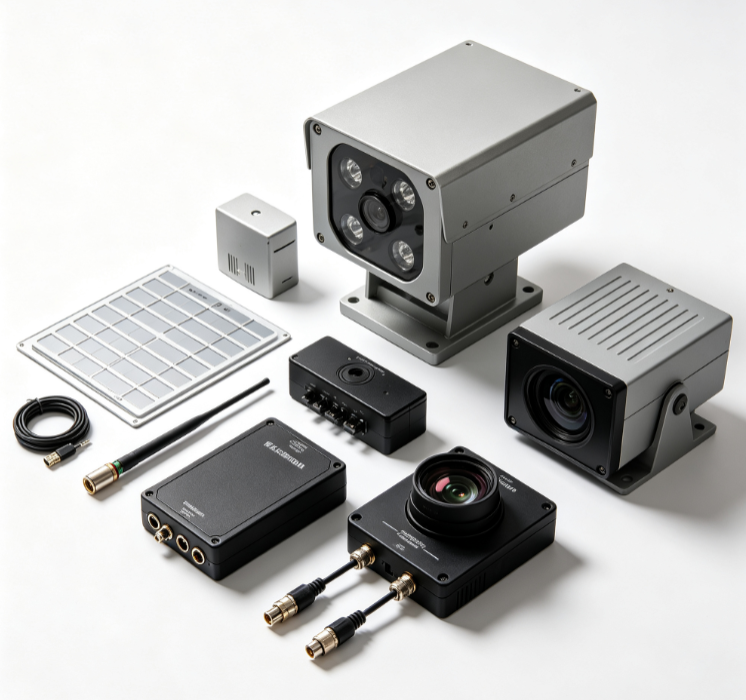
Table of Contents
1. Basic Overview of Drone Detection System
2. Core Working Principles of Drone Detection System
3. Main Sensor Types for Drone Detection
4. Technical Performance Comparison of Detection Sensors
5. Key Deployment Scenarios for Drone Detection System
6. Standard Performance Parameters for Industrial Use
7. Common FAQs for Drone Detection System
1. Basic Overview of Drone Detection System
A drone detection system is a professional counter-UAV security device. It monitors and identifies unauthorized drones in low-altitude airspace.
Illegal drone flights bring many security risks. These risks include site intrusion, privacy leakage and facility damage.
Modern drone detection system integrates multiple sensing modules. It supports real-time monitoring, target tracking and drone classification.
Common matching devices include radio frequency detector, drone tracking radar and optical surveillance camera. These components form a complete detection solution.
2. Core Working Principles of Drone Detection System
Different detection modules work in different ways. Most systems combine passive and active detection technology.
2.1 RF Signal Scanning
RF detection modules capture wireless signals between drones and remote controllers.
It scans common drone frequency bands like 900MHz, 2.4G and 5.8G. It picks up abnormal signal sources in the coverage area.
This method needs no signal emission. It has low interference to surrounding electronic equipment.
2.2 Radar Wave Detection
Drone detection radar emits electromagnetic waves. It receives reflected signals from flying drone targets.
The system calculates target distance, speed and azimuth. It tracks moving drones continuously.
It can identify micro Doppler features. This feature helps distinguish drones from birds and other flying objects.
2.3 Optical Visual Recognition
Optical sensors and AI cameras collect real-time video footage. Built-in algorithms finish drone image recognition.
It offers visual confirmation of target types. It makes detection results more intuitive for on-site staff.
3. Main Sensor Types for Drone Detection
Single sensor has usage limits. Multi-sensor fusion becomes the mainstream of drone detection system.
3.1 Radio Frequency (RF) Sensor
RF sensors focus on wireless signal capture. They work stable in most weather conditions.
They do not need transmission licenses. They suit short and medium-range daily security monitoring.
3.2 Surveillance Radar Sensor
Radar sensors support long-range all-weather detection. They work well in dark, fog and rainy days.
They track multiple targets at the same time. They are widely used in high-security sites.
3.3 Acoustic Sensor
Acoustic sensors collect drone rotor noise. They identify targets through sound frequency analysis.
They only fit short-range detection. Environmental noise will affect their detection accuracy.
3.4 Optical Imaging Sensor
Optical sensors provide clear target images. They support secondary confirmation of alarm targets.
They rely on light conditions. Detection performance drops heavily in heavy fog or strong haze.
4. Technical Performance Comparison of Detection Sensors
Each sensor type has different performance advantages. The table below shows core industrial data for reference.
Sensor Type | Max Detection Range | Weather Resistance | Target Classification Ability | False Alarm Rate |
RF Sensor | 2-5 km | High | Medium | Low |
Surveillance Radar | 3-10 km | Very High | High | Very Low |
Acoustic Sensor | 0-500 m | Low | Medium | Medium |
Optical Sensor | 0.5-3 km | Low | Very High | Low |
Radar sensors have the best comprehensive performance for long-distance outdoor monitoring.
Optical sensors act as the best auxiliary module for visual verification of suspicious targets.
5. Key Deployment Scenarios for Drone Detection System
Drone detection system serves multiple high-security public and industrial sites.
Airports use the system to prevent drone interference with flight takeoff and landing.
Power stations and chemical plants deploy it to avoid explosion and safety accidents caused by illegal drones.
Stadiums and exhibition venues install the system for public safety control during large events.
Military bases and government sites rely on it for low-altitude boundary security defense.
6. Standard Performance Parameters for Industrial Use
Qualified industrial drone detection system has fixed industry standard parameters.
The standard false alarm rate is less than 5 times per hour for manual monitoring mode.
Automatic working mode requires false alarm rate lower than 1 time per day.
Professional radar detection accuracy reaches ≤5 m range error and ≤0.5° angular error.
High-end systems achieve drone classification accuracy above 90% in complex environments.
7. Common FAQs for Drone Detection System
Q1: Can drone detection system work at night?
A1: Yes. Radar and RF modules work 24 hours a day. Optical sensors with night vision function also support night monitoring.
Q2: Will the system produce signal radiation interference?
A2: Passive detection modules have no signal emission. Active radar modules keep radiation within safe industrial standards.
Q3: What drones can the system detect?
A3: It covers most consumer FPV drones, industrial drones and small low-altitude UAVs. It can identify micro-sized drones above 0.0015㎡.
Q4: Does bad weather affect detection results?
A4: Heavy rain and fog have little impact on radar and RF detection. They will greatly reduce optical sensor detection effect.