
October 16, 2026
Industrial Grade Acetic Acid: Purity, Production Routes, and Practical Selection
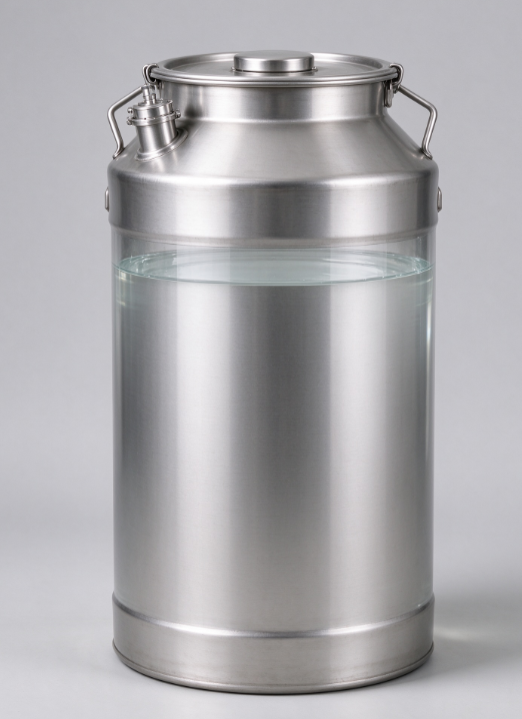
Table of Contents
1. What Is Industrial Grade Acetic Acid?
2. Industrial Grade vs. Food Grade Acetic Acid
3. How Industrial Grade Acetic Acid Is Made
4. The Key Specification Numbers
5. Market Data: Production and Demand
6. Main Uses of Industrial Grade Acetic Acid
7. How to Choose and Store It Right
8. Industrial Grade Acetic Acid FAQ
9. Data Sources
Industrial grade acetic acid is one of the most used chemicals in the world. It shows up in paints, adhesives, fibers, solvents, and a long list of other products. Most people never see it, but almost everything they touch has passed through it at some point.
This guide covers what industrial grade acetic acid is, how it differs from food grade, how it is made, the key numbers, and how to choose and store it right. Keep it simple.
What Is Industrial Grade Acetic Acid?
Acetic acid is a simple organic acid with the formula CH3COOH. In pure form it is called glacial acetic acid, because it freezes into ice-like crystals just below room temperature. Its CAS number is 64-19-7.
Industrial grade acetic acid usually means the glacial grade with a purity of 99.8% or higher. It is a clear, colorless liquid that mixes fully with water. It is used as a chemical raw material, not as a food item. That is the main difference from food grade.
Industrial Grade vs. Food Grade Acetic Acid
The two grades look the same and share the same molecule. The difference sits in purity limits, testing, and how the acid can be used. This table lines up the key points.
Parameter | Industrial Grade | Food Grade |
Typical purity | 99.8–99.85% min | 99.8%+ |
Main use | chemical raw material, solvents, synthesis | food additive E260, preservative |
Key tests | purity, moisture, color | above, plus heavy metal and impurity limits |
Regulation | industrial and technical standards | food-safety standards |
Price | lower | premium |
If the acid touches food, use food grade. If it feeds a chemical process, industrial grade is the right and cheaper call.
How Industrial Grade Acetic Acid Is Made
Methanol carbonylation is the main route. Methanol reacts with carbon monoxide over a rhodium or iridium catalyst to make acetic acid. It is efficient, cheap at scale, and accounts for the large majority of world output. Studies put its share at 63% to 90% of production.
Acetaldehyde oxidation is an older route. It uses simple equipment but costs more and makes more byproducts. Bio-based fermentation is small but growing, driven by demand for low-carbon feedstocks.
The Key Specification Numbers
Purity
Industrial grade glacial acetic acid is sold at 99.5%, 99.8%, or 99.85% minimum purity. The 99.8% grade is the common workhorse for downstream synthesis.
Physical properties
It boils at about 117.9°C and has a density near 1.05 at 20°C. The freezing point sits around 16.5°C, which is why cold storage matters. Moisture is measured by methods like GB/T 6283.
Hazard class
The acid is corrosive. In transport it carries Hazard Class 8 with a subsidiary 3 risk. It can burn skin and eyes, and vapors are irritating. Handling needs proper gear and ventilation.
Market Data: Production and Demand
Global acetic acid output was about 20.51 million tons in 2025. It should reach 26.89 million tons by 2031, growing at a CAGR near 4.6%. In value terms, the market was about USD 8 billion in 2025 and could pass USD 11.89 billion by 2034.
Supply keeps expanding. More than 5 million tons of new capacity is under construction or in planning, mostly in China. This new wave is expected to push world capacity past 25 million tons between 2026 and 2028.
Main Uses of Industrial Grade Acetic Acid
Vinyl acetate monomer, or VAM, is the biggest outlet. It takes roughly a quarter to a third of demand and feeds adhesives, paints, coatings, and packaging films. Ethylene vinyl acetate, used in solar panel films, also comes from this chain.
Purified terephthalic acid, or PTA, is the second big consumer. PTA feeds PET bottles and polyester fibers. Acetic anhydride and acetate esters take the next shares, feeding solvents, dyes, and pharmaceuticals. Together PTA, VAM, and ethyl acetate account for over half of global consumption.
How to Choose and Store It Right
Match the grade to the job. Chemical synthesis and process use call for industrial grade. Any food contact calls for food grade. Pick the purity your process spec asks for, and no higher, to control cost.
Store the acid in corrosion-resistant tanks, usually stainless steel. Keep it away from moisture and heat, and remember the freezing point near 16.5°C. Add a desiccant or use sealed drums to stop water pickup, because water drops the effective concentration.
Industrial Grade Acetic Acid FAQ
Q: Is industrial grade acetic acid the same as glacial acetic acid?
A: Not exactly. Glacial acetic acid is the pure, concentrated form, usually 99.8% or higher. Industrial grade is that glacial acid sold for non-food use.
Q: Can industrial grade acetic acid be used for food?
A: No. Food contact needs food grade, which meets stricter impurity limits. Do not use industrial grade where it touches food.
Q: What is the difference between 99.5% and 99.8%?
A: The purity and the moisture. The 99.8% grade has less water and is the common choice for downstream synthesis. Pick based on your process spec.
Q: What is industrial grade acetic acid used for?
A: It feeds VAM, PTA, acetic anhydride, acetate esters, and many solvents. It is a core chemical raw material.
Q: Is it hazardous to handle?
A: Yes. It is corrosive and carries Hazard Class 8. Use proper protection and ventilation when handling.