October 16, 2026
Industrial Sodium Carbonate: A Buyer's Guide to Soda Ash Grades and Their Uses
Contents
1. What Is Industrial Sodium Carbonate?
2. How Soda Ash Is Made
3. Light vs Dense Soda Ash
4. Main Industrial Applications
5. Typical Pricing and Specifications
6. Buying and Handling Checklist
7. FAQ
What Is Industrial Sodium Carbonate?
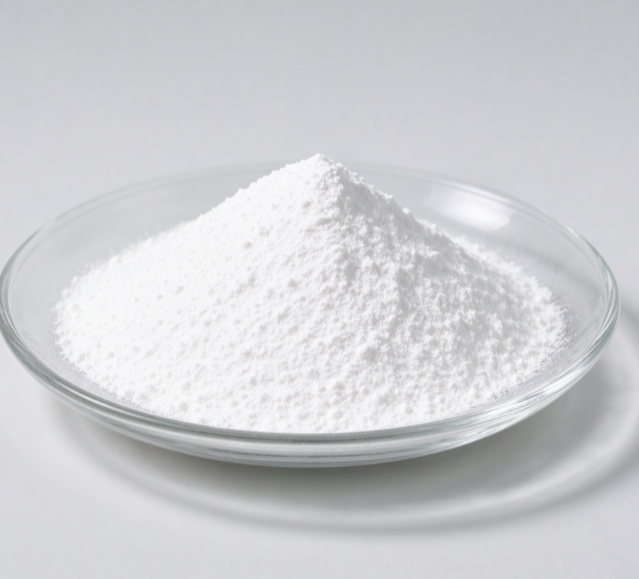
Industrial sodium carbonate is the chemical Na₂CO₃, better known as soda ash. It is a white, water-soluble powder that shows up across almost every process industry. Glass plants, detergent factories, water treatment operators, pulp and paper mills all buy it in bulk.
The numbers behind it are big. The global sodium carbonate market was worth about USD 18.7 billion in 2025. It is expected to reach USD 32.9 billion by 2035, growing around 5.8% a year. On a tonnage basis, world demand sat near 76 million tons in 2025, heading to roughly 109 million tons by 2035.
Why industry cares about it
Soda ash is a cheap source of alkali. It buffers pH, softens water, breaks down fats, and melts silica for glass. No other chemical covers that range at the same cost per ton. That is why it ranks among the highest-volume inorganic chemicals traded worldwide.
How Soda Ash Is Made
Two routes dominate production. Both end with the same chemical, but the economics differ.
Solvay process
The Solvay process starts with salt brine and limestone. Ammonia is used as a recyclable carrier. It was the workhorse method for a century. Most plants still run it, but it makes a lot of calcium chloride waste and carries higher energy cost.
Natural soda ash
Natural soda ash comes from trona ore, a mineral mined in Wyoming, Turkey, Kenya and China. Trona is crushed, dissolved, refined, then crystallized. It costs less to make and has a smaller carbon footprint. Natural capacity has grown fast and now competes head-on with Solvay plants.
Light vs Dense Soda Ash
Same formula, different physical form. The difference controls which grade you buy.
Property | Light soda ash | Dense soda ash |
Bulk density | 0.45–0.6 g/cm³ | 0.9–1.1 g/cm³ |
Particle size | ~150 µm powder | 300–500 µm granules |
Dissolution speed | Fast | Slower |
Dust level | Higher | Low |
Transport cost | Higher per ton | Lower per ton |
Main uses | Detergent, chemicals, water | Glass |
Dense soda ash is the standard for glass. Its granules mix evenly with sand and limestone in the batch, cut dust, and reduce segregation during handling. Light soda ash dissolves faster, so detergent and chemical makers prefer it for quick solution preparation.
Main Industrial Applications
Glass manufacturing
Glass takes about half of global soda ash output. Soda ash works as a flux. It lowers the melting point of silica, which cuts furnace energy use by up to 10%. Flat glass for buildings and vehicles, plus container glass for food and drinks, rely almost entirely on dense soda ash.
Detergents and soaps
Light soda ash raises pH and softens hard water. That lets surfactants work better and lifts grease off surfaces. Most powder detergents carry soda ash as a filler and builder.
Water treatment
Soda ash raises pH in acidic water and precipitates hardness ions. It works in municipal plants and boiler feedwater treatment. Rapid dissolution makes light grade the common pick here.
Chemicals and pulp
It feeds sodium silicate, sodium bicarbonate, and many downstream chemicals. Pulp and paper mills use it in kraft recovery to regenerate the cooking liquor. Textile, oilfield and food-processing plants also buy it in smaller lots.
Typical Pricing and Specifications
Export pricing in 2025–2026 lands in a wide band depending on grade, purity and quantity.
· 99.2% dense soda ash, bulk container: USD 180–260 per ton.
· 99.2% light soda ash, bagged: USD 179–259 per ton.
· 98% industrial grade, small lots: USD 199–420 per ton.
· High-purity 99%+ for chemicals: up to USD 299 per ton on small orders.
Common specs buyers ask for: Na₂CO₃ content min 99.2%, sodium chloride below 0.7%, iron low for glass-grade. Packaging runs 25 kg bags, 50 kg bags, 1,000 kg big bags, or bulk pneumatic trucks.
Prices swing with energy, freight and plant utilization. Natural-sourced supply and new capacity tend to soften price spikes, but freight to your port often decides the real landed cost.
Buying and Handling Checklist
· Confirm purity and grade against your process, not just the label.
· Ask for COA (certificate of analysis) per batch.
· Match particle size to your feeding equipment.
· Buy dense for bulk transport and glass; buy light for fast dissolving.
· Keep soda ash dry. It absorbs moisture and carbon dioxide and forms lumps.
· Store away from acids. Mixing produces CO₂ and heat.
A cheap price per ton means little if the wrong grade jams your silo or slows your batch.
FAQ
Q1. Is soda ash the same as baking soda? No. Soda ash is sodium carbonate (Na₂CO₃), a strong alkali. Baking soda is sodium bicarbonate (NaHCO₃), milder. They are not interchangeable in most processes.
Q2. Can light soda ash replace dense soda ash in glass? Not recommended. Dense grade gives better feed control, lower dust, and more even mixing in the furnace. Substituting light grade changes batch consistency and energy use.
Q3. Which grade should a water treatment plant buy? Light soda ash dissolves faster, so it suits most pH adjustment and softening jobs. Dense grade can still work if the plant has the right dissolving equipment.
Q4. How much soda ash does one ton of glass need? It varies by glass type. Container and flat glass batches typically use roughly 10–20% soda ash by weight. The exact share depends on the recipe and cullet ratio.
Q5. Is natural soda ash better than Solvay soda ash? Chemically the product is identical. Natural soda ash usually costs less and has a smaller footprint, but Solvay plants remain important in regions without trona reserves. Pick on delivered cost and consistent quality.