
October 21, 2026
Low Altitude Surveillance Radar: Features, Applications and Performance Comparison
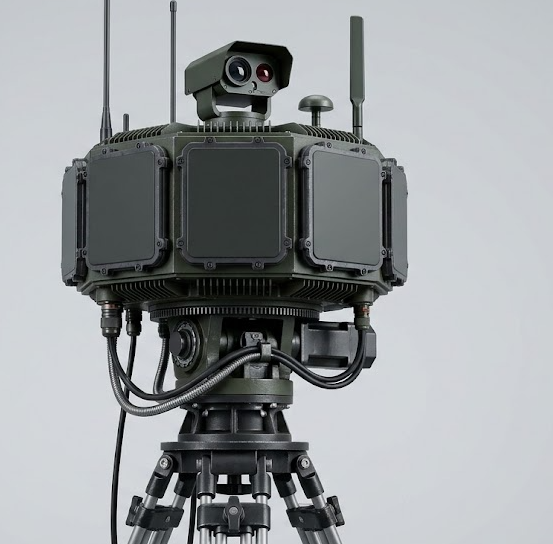
Table of Contents
1. Introduction
2. Core Working Principles of Low Altitude Surveillance Radar
3. Key Technical Specifications and Performance Data
4. Main Application Scenarios
5. Core Advantages Over Traditional Radar Systems
6. Industry Frequently Asked Questions
Introduction
Low altitude surveillance radar acts as a core device for low-altitude airspace security monitoring. It fills the monitoring blind area of traditional high-altitude radar systems.
Most conventional radar equipment fails to capture low-flying, small-size targets effectively. Low altitude surveillance radar solves this problem with optimized signal processing and scanning modes.
It mainly tracks low-altitude targets like micro drones, low-flying helicopters, ground vehicles and pedestrian targets. It supports 24-hour all-weather unattended monitoring for key regional security.
Core Working Principles of Low Altitude Surveillance Radar
Pulse Doppler Signal Processing Technology
Most low altitude surveillance radar systems adopt pulse Doppler technology. It filters static ground clutter and highlights moving low-altitude targets.
This tech reduces false alarms caused by buildings, trees and terrain. It keeps stable detection accuracy in complex urban and suburban environments.
Common Operating Frequency Bands
Ku-band and X-band are the most widely used frequency bands for civilian and commercial low-altitude surveillance devices.
Ku-band radar has higher detection sensitivity for tiny drone targets. X-band radar provides more stable performance in rainy and foggy weather.
360-Degree Omnidirectional Scanning
Standard low altitude surveillance radar uses mechanical azimuth scanning plus digital elevation beamforming.
It covers full horizontal azimuth without monitoring dead angles. The vertical scanning range adapts to conventional low-altitude flight heights below 600 meters.
Key Technical Specifications and Performance Data
Different low altitude surveillance radar models have obvious differences in detection range and target adaptability. The table below lists mainstream industry standard parameters for common models.
Radar Parameter | Short-Range Model | Medium-Range Model |
Operating Band | Ku-band | Ku-band |
Max Detection Altitude | 300 m | 600 m |
Min Blind Zone | 50 m | 50 m |
Detection Range (0.01㎡ RCS Drone) | 5 km | 10 km |
Detection Range (Pedestrian) | 8 km | 14 km |
Max Target Tracking Number | 50+ | 100+ |
Azimuth Coverage | 360° | 360° |
Data shows medium-range low altitude surveillance radar doubles the detection distance for micro drones compared with short-range models. It also supports more simultaneous target tracking.
All mainstream models keep a 50-meter minimum blind zone. This design meets the basic safety monitoring needs of most key sites.
Main Application Scenarios
Critical Infrastructure Security
Power stations, oil and gas facilities, and ports rely on low altitude surveillance radar for perimeter protection.
The system monitors unauthorized low-altitude drone flights and suspicious vehicle access. It triggers real-time alerts for potential security risks.
Airport and Heliport Monitoring
Low-altitude flying drones and birds bring huge hidden dangers to aircraft takeoff and landing.
Low altitude surveillance radar provides continuous airspace monitoring around airports. It helps ground staff avoid flight collision accidents.
Border and Regional Defense
Border areas need long-time unattended monitoring. Low altitude surveillance radar adapts to outdoor harsh environments.
It tracks low-altitude intrusion targets and supplements traditional border defense monitoring systems.
Industrial Park and Campus Safety
Large industrial parks and university campuses have wide monitoring areas. Fixed monitoring cameras have limited coverage.
Low altitude surveillance radar achieves full-area no-dead-angle monitoring. It improves overall site safety management efficiency.
Core Advantages Over Traditional Radar Systems
Traditional air defense radar focuses on high-altitude large aircraft monitoring. It has poor sensitivity for low-altitude small targets.
Low altitude surveillance radar uses optimized moving target indication technology. It suppresses ground clutter effectively.
The equipment size is smaller and installation is flexible. It does not need large-scale fixed construction.
It supports 24-hour automatic operation. Manual intervention is not required in daily monitoring. It cuts long-term labor costs for security management.
The target recognition speed is fast. It can feed real-time target coordinate and speed data to the back-end platform.
Industry Frequently Asked Questions
Q1: What targets can low altitude surveillance radar detect?
A1: It can detect micro drones, medium fixed-wing drones, low-flying helicopters, ground pedestrians and vehicles. It also tracks low-speed low-altitude flying targets within 600 meters altitude.
Q2: Can the radar work in bad weather conditions?
A2: Yes. Radar signals are not affected by light, rain, fog or snow. It keeps stable monitoring performance in all-weather day and night environments.
Q3: What is the main difference between short-range and medium-range models?
A3: Medium-range models have longer detection distance for tiny RCS targets and support more target tracking. Short-range models are more suitable for small and medium-sized sites with limited monitoring scope.
Q4: Does the radar produce monitoring blind spots?
A4: It achieves 360° horizontal coverage. Only a fixed 50-meter near-end blind zone exists, which is a standard design for low-altitude radar equipment.
Q5: Is unattended automatic monitoring supported?
A5: All mainstream low altitude surveillance radar systems support 24-hour unattended operation. It can automatically track targets and output alarm information.