
October 21, 2026
Vehicle Mounted Counter Drone System: Features, Applications and Performance Data
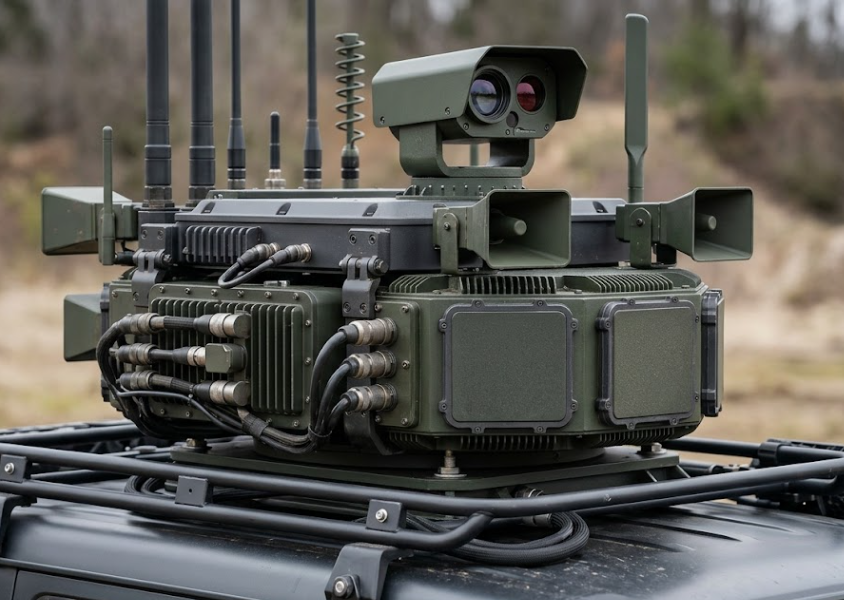
Table of Contents
1. Overview of Vehicle Mounted Counter Drone System
2. Core Components of Vehicle Mounted Counter Drone System
3. Key Performance Parameters and Data Comparison
4. Main Application Scenarios
5. Market Adoption and Industry Statistics
6. Industry Frequently Asked Questions
1. Overview of Vehicle Mounted Counter Drone System
Small and medium-sized civilian and military drones bring new security risks. Illegal drone intrusion, swarm drone attacks and unauthorized aerial surveillance happen more often in recent years.
Fixed anti-drone devices have limits in mobile defense and wide-area coverage. They cannot move fast to follow patrol routes or moving targets.
Vehicle mounted counter drone system solves this problem well. It is a mobile counter-UAS solution installed on ground vehicles. It integrates detection, identification and jamming functions in one platform.
This mobile counter drone equipment supports rapid deployment. It works in offline single-unit mode. It adapts to complex field environments and dynamic security missions.
2. Core Components of Vehicle Mounted Counter Drone System
2.1 Drone Detection Module
The detection unit uses multi-band radar and radio frequency receiving sensors. It captures weak drone signal sources in low-altitude airspace.
It can spot mini drones and micro drones that traditional air defense systems ignore. It supports 24-hour all-weather monitoring.
2.2 RF Jamming Module
The RF jamming module is the core countermeasure unit. It interferes with drone control signals and satellite navigation signals.
It forces illegal drones to land automatically or hover in place. It does not cause extra damage to surrounding civilian electronic equipment in most scenarios.
2.3 Vehicle Integration and Control Terminal
The whole system fixes on standard patrol vehicles and military tactical vehicles. It needs no large-scale vehicle modification.
The in-vehicle control terminal shows real-time airspace data. Operators can start or stop countermeasures with simple operations.
3. Key Performance Parameters and Data Comparison
Vehicle mounted counter drone system has obvious advantages over fixed anti-drone systems and portable anti-drone devices. The below table shows verified core performance data.
Performance Index | Vehicle Mounted Counter Drone System | Portable Anti-Drone Device | Fixed Anti-Drone System |
Effective Working Range | 10-15 km | 3-5 km | 8-12 km |
Output Power | 50-100W | 10-30W | 80-120W |
Mobile Deployment Ability | Strong, real-time mobile coverage | Weak, manual carrying only | None, fixed position coverage |
Suitable for Dynamic Missions | Yes | No | No |
The mobile design lets vehicle mounted devices keep stable performance during vehicle movement. It has no signal interruption in low-speed patrol scenarios.
Its effective range is far longer than portable products. It balances power consumption and defense coverage better.
4. Main Application Scenarios
4.1 Military and Border Defense
Military convoys and forward defense bases face frequent low-altitude drone threats. Vehicle mounted counter drone system provides mobile air defense protection.
It resists single drone attacks and small-scale drone swarm invasion. It is the main mobile C-UAS equipment for land maneuver troops.
4.2 Critical Infrastructure Protection
Power plants, chemical parks and airport perimeters need flexible security defense. Fixed equipment has blind coverage areas.
Vehicle mounted anti-drone devices patrol around key facilities. They fill defense gaps of fixed monitoring systems.
4.3 Public Security and Large Event Security
Sports meetings, political activities and urban core areas need temporary airspace management. Illegal drone flights easily cause safety accidents.
The vehicle mounted system can be deployed quickly. It supports temporary airspace closed management and real-time risk disposal.
5. Market Adoption and Industry Statistics
Global counter-UAS market data in 2025 shows vehicle mounted counter drone systems occupy a key market share in mobile defense fields.
Military and defense departments are the largest end users of this equipment. Verified industry data shows clear market distribution features.
In 2025, military and defense end users take up 75.37% of the global vehicle mounted counter drone system market value, reaching 1074.41 million USD.
Mobile vehicle-mounted C-UAS platforms account for 28.7% of all counter-drone equipment platforms. They keep the highest growth rate in all mobile defense segments, with a 22.4% CAGR from 2025 to 2034.
The system also holds 26.1% share in the global portable and mobile anti-drone product market. It becomes the mainstream choice for mobile low-altitude defense.
6. Industry Frequently Asked Questions
Q1: What is the biggest advantage of vehicle mounted counter drone system compared with other anti-drone devices?
It has free mobile deployment capability. It combines long defense range and high power output. It adapts to dynamic patrol and mobile protection missions, which fixed and portable devices cannot support.
Q2: Can this system work in offline environment without network support?
Yes. Most mainstream vehicle mounted counter drone systems support standalone offline operation. It needs no external network to finish detection and jamming tasks. It fits remote border and field military scenarios.
Q3: What main targets can the vehicle mounted counter drone system defend against?
It covers micro drones, mini civilian drones, small industrial drones and small drone swarms. It can block illegal aerial surveillance, intrusion and attack behaviors of low-altitude unmanned aerial vehicles.
Q4: Which industries purchase vehicle mounted counter drone systems the most?
Military defense is the top purchasing industry. Public security, airport operation, energy chemical and border security industries also have stable and growing procurement demands.